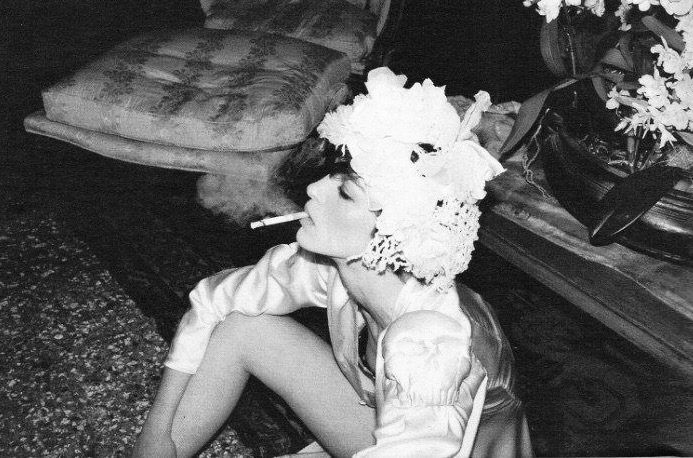
Has Fashion Lost Its Sense of Fantasy?
The dominance of “wearability,” relatability, and market drivers.
By Anna Beth Mauldin
December 26, 2025, 5:36 PM
As this year comes to a close, I can’t help but reflect on passing trends and how far we have fallen into purchasing apparel driven by fast fashion, overconsumption, and relatability.
We’re stuck in a nostalgic trap, leading to endless revivals rather than new ideas. Consumers are rewarded for conformity rather than curiosity. They are trained to buy what feels familiar, shareable, and instantly digestible rather than what challenges or transforms.
As fashion prioritizes wearability, relatability, and algorithmic appeal, it risks losing its capacity for fantasy—not because designers lack imagination, but because the industry increasingly demands legibility, realism, and immediate relevance. All in all, fashion is slowly becoming no longer fashionable, and it’s in the hands of emerging designers and brands to push boundaries.
Historically, fashion offered distance from the everyday. Designers created worlds you could not immediately access. Magazines mediated fashion through storytelling, styling, and mystique. Fantasy wasn’t about realism. It was about desire, projection, and imagination.
Straying farther from fantasy and Rococo, I sense that the industry feels tired. Clothing brands continue to release repetitive pieces, most of which vary slightly from the same silhouettes and styles. At what point in time did we fall into this cycle of obvious following and conformity with one another?
I blame this stray from individuality and fantasy on the rise of social media. Just look at runway trends from the late 90s into the early 2000s, when social media wasn’t yet on the horizon. From grunge fashion to metallic and shiny accents, skin-bearing styles, and bold colors, this age of apparel reflected an optimism about the possibilities that lie ahead. Theatrically and storytelling defined this time of glamour and excess. From John Galliano to Christian Lacroix, flamboyant and exuberant storytelling defined an era in which fashion operated as spectacle rather than content.
I’m in no way saying that the majority of runway shows and street style have lost their sense of fantasy. I just mean that while fantasy still exists, it is increasingly diluted—filtered through the need for virality, relatability, and commercial safety.
Regarding the influence of social media on the industry, it’s undeniable that online platforms have significantly impacted consumer behavior and purchasing decisions. It seems like everyone is imitating exact looks, stifling originality. Social media has accelerated trend cycles, prioritizing mimicry that favors viral, easily copied aesthetics. Microtrends such as “clean girl” or “coquette” aesthetics rise and fall within weeks, creating pressure to constantly stay up to date on trending styles.
Influencer culture and duplication correspondingly encourage followers and buyers to purchase and wear the same products, blurring the line between individuality and a mass-produced look. Fewer people are utilizing their own unique, personal style. Instead, they rely on these influences to update them on what is “trending,” and what they “should” be wearing for the next few weeks, if months. This fleetingness creates an endless cycle of impulse purchases that will soon be discarded.
And yet, fast fashion brands are thriving on this immediate relevance and trend fluctuation from buying consumers. The repeated and constant influx of cheap, easily discarded products devalues craftsmanship for instant gratification, making fashion feel less like an art and more like a commodity.
I am also not undermining the rise of the minimalist style. Minimalism, when practiced intentionally, can be a powerful demonstration of quiet intentionality and security. It speaks in codes rather than declarations, favoring understatements not as an absence of expression, but as proof of assurance.
The issue arises when minimalism becomes synonymous with sameness: falling into a pattern reduced not to a philosophy, but to a market-friendly uniform optimized for mass appeal and social media palatability. Minimalism is no longer a discipline; it is reduced to a trend.
With all of this being said, this artistic revival lies in the hands of our generation’s up-and-coming designers and innovators. They must resist the pressure to design solely for algorithms, virality, and mass approval, and instead reclaim fashion as a space for risk, storytelling, and imagination.
Fantasy does not require excess—it requires intention, courage, and a willingness to unsettle. If fashion is to regain its cultural power, it must once again allow room for mystery, discomfort, and desire, rather than immediate consumption. The future of fashion depends not on what is most wearable or most marketable, but on who is brave enough to imagine beyond what is already familiar.